
or use the SITEMAP
Wardrobe Planning - How to plan a wardrobe that fits your life
If your wardrobe feels full but still somehow unhelpful, you are not alone. Most of us don't need more clothes.
We need a wardrobe that works better for the life we live now. That is what wardrobe planning is about - not perfection, just a little more clarity about what suits you, what supports your routine and what makes getting dressed easier.
Simply ask yourself; do these clothes suit my life and do they work together?
Let's see how we can make it easier with a little planning.
Start with the life you actually live
This is the most important part.
It's easy to buy for a life that looks lovely in theory but has very little to do with your normal week. The smart dress for events that rarely happen; the shoes that looked promising until real life got involved.
Instead, think about what you really need clothes for. Everyday errands, work, walking, meeting friends, travel, time at home and the odd proper occasion. Your wardrobe needs to reflect that balance.
If most of your life is casual or smart casual, that should be the strongest part of your wardrobe. If you only dress up occasionally, you don't need lots of occasion clothes taking up space.

Break your wardrobe into simple categories
When a wardrobe feels muddled, it helps to stop seeing it as one big heap of clothes.
Think in simple categories such as:
- everyday clothes
- smarter outfits
- outerwear
- shoes
- bags and accessories
- occasion pieces
You don't need perfect lists. The aim is simply to see the shape of your wardrobe more clearly.
This often highlights imbalances. You may have plenty of tops but not enough useful bottoms; or several jackets but no coat that really earns it's keep; or shoes that look fine but don't go with many outfits.
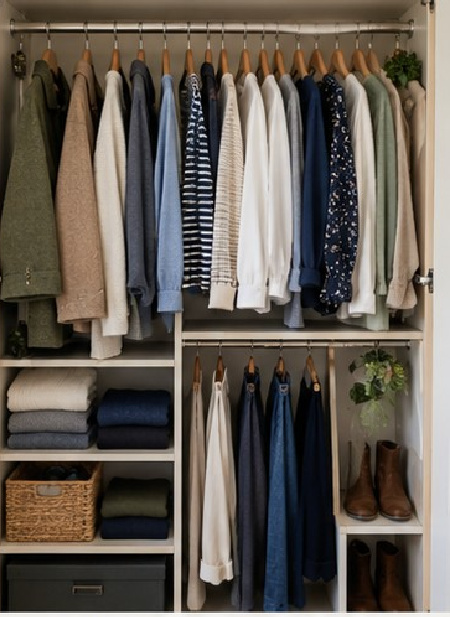
Look for gaps, duplicates and weak links!
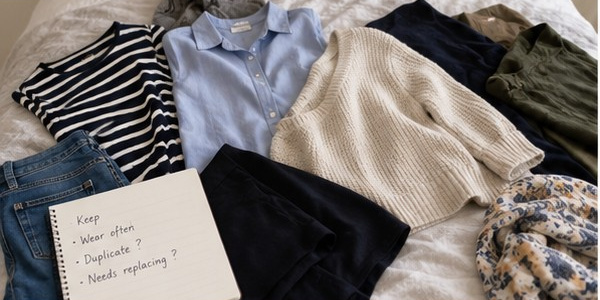
This is where wardrobe planning becomes really useful.
Gaps are the pieces you genuinely need. Perhaps a cardigan that works with dresses and trousers or ankle boots you can wear with more than one outfit.
Duplicates are the things you seem to buy again and again. A row of similar tops may feel safe, but it can also mean the wardrobe still lacks variety or balance. I realise that this is my major downfall as I count my stripe tops!
Weak links are the pieces that let you down. Shoes that hurt. Trousers that never feel quite right. A jacket that only works with one outfit. These are often the reason a wardrobe feels harder to use than it should.
Think in outfits, not individual items
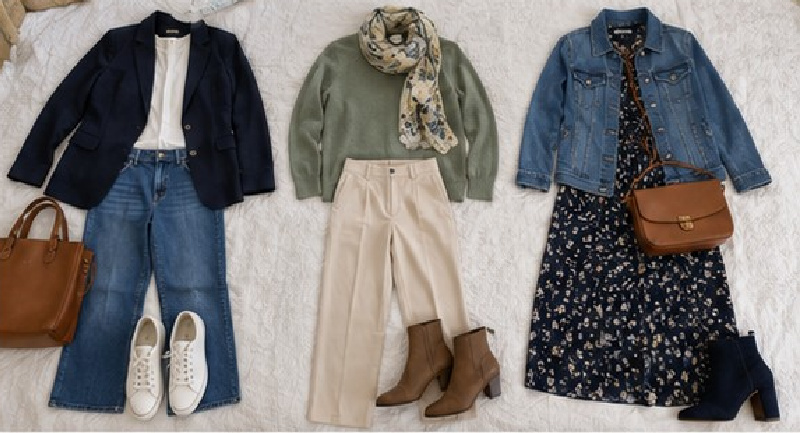
This shift helps enormously.
A wardrobe can look full and still feel impossible if nothing connects. So rather than thinking item by item, think in outfits.
- What do you wear with those trousers?
- What goes over that dress?
- Which shoes work with most of your everyday clothes?
You really don't need dozens of combinations. Just a few reliable ones for the life you live. Simple formulas are often enough:
- jeans + knit + jacket
- trousers + top + cardigan
- dress + boots + coat
When clothes work together, the whole wardrobe feels calmer.
Shop with more purpose
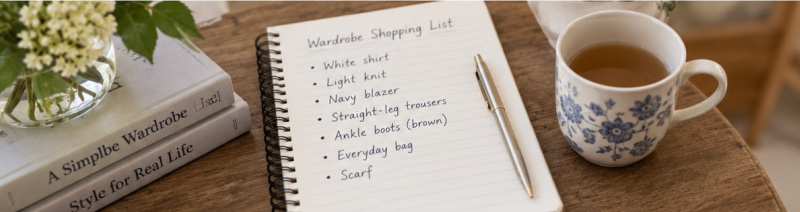
Wardrobe planning doesn't mean that you have to plan to shop or that you shouldn't shop at all. It just means that when you do shop, you do so with more clarity!
Once you know your gaps and weak links, it's easier to buy well. A short shopping list helps. Keep it specific. Not “I need some new clothes”, but “I need a navy cardigan” or “I need everyday boots that work with dresses and jeans.”
Before buying, ask yourself:
- Will I wear this often?
- Does it work with several things I own?
- Is it comfortable?
- Does it suit my life now?
Those questions prevent a lot of wardrobe mistakes.
Keep the Plan flexible
A wardrobe plan isn't fixed forever! Life changes and your wardrobe will need to change with it.
If getting dressed has started to feel awkward or repetitive, that's usually a sign that something needs adjusting. Often not a complete overhaul, just a little more thought.
A wardrobe that works better for you.
In the end, wardrobe planning is about ease. You don't need a huge wardrobe or a perfect one. You just need one that suits your life, works as a whole and makes getting dressed a whole lot easier!
If you would like to put these ideas into practice for the coming season, Link to: The Autumn Wardrobe Edit and Plan
You might like these
Ready for a wardrobe makeover?
Nothing to wear and hectic lifestyle? Getting organized with a Wardrobe Makeover isn't an indulgence, it's just plain common sense!
A sensible Closet Makeover
A closet makeover for women over 50. Learn how to refresh your wardrobe, clear the clutter, and create a stylish, organized closet without overspending.
Make life easier - organize your wardrobe
Make life easy for yourself! Organize your wardrobe, just a tidy up so you can see what you've got!



Homepage >> Wardrobe Organization >> Wardrobe Planning
Hi I'm Pamela - come join me!

The latest on THE BLOG!


-
5 Common Style Mistakes
Oct 01, 26 01:51 PM
 5 common style mistakes; Holding on; fitting your life style; no strategy; making do and lacking confidence!
 -
Refresh Your Wardrobe with New-Season Style Confidence
Oct 01, 26 01:51 PM
Get more from the clothes you own with style confidence for a new season. Learn how small updates, better colors, and fit can refresh your look.



Like to join the Style Yourself Confident Group Board on Pinterest? Just Contact me to be added ...
By Pamela Graham Copyright 2012-2026 Style-Yourself-Confident.com
Powered by Solo Build It